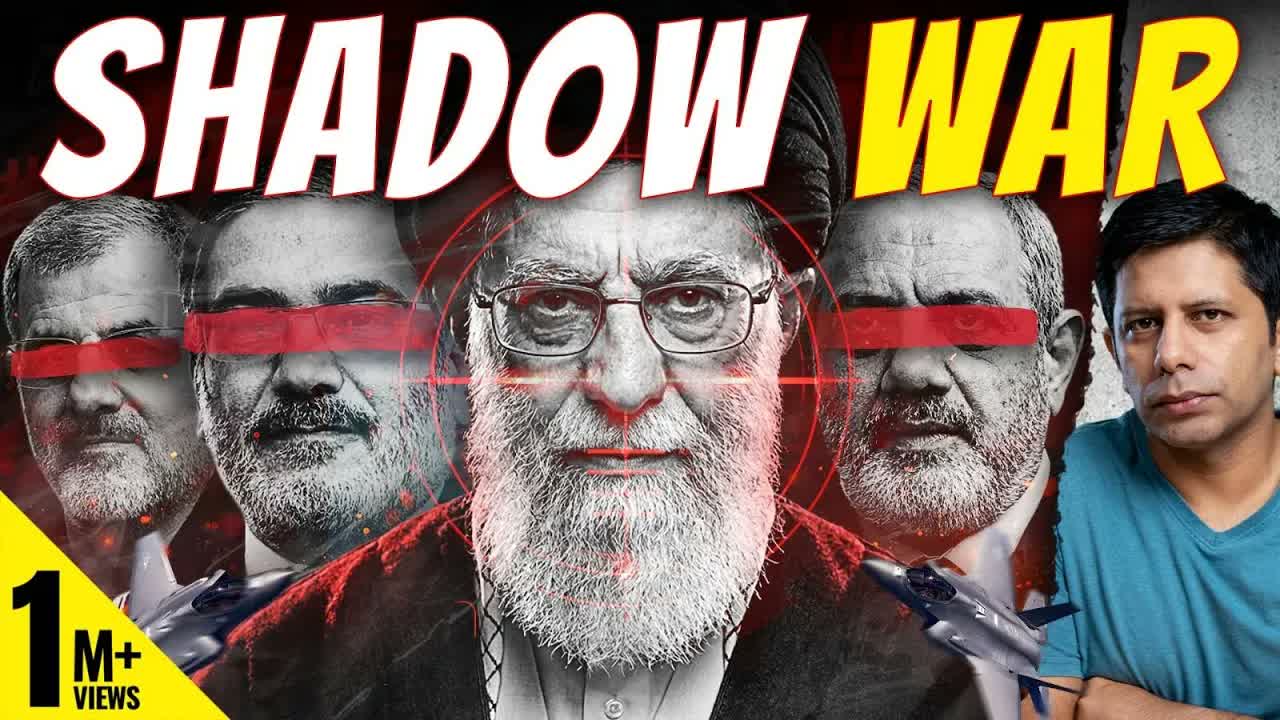
Did Trump Get Iran Wrong? | US Forces Struggle To Overcome The Ballistic Backlash
Four days into the US-Iran conflict, the initial assumptions that guided the Trump administration’s military planning are collapsing under the weight of Iran’s determined resistance. Questions multiply about America’s war aims, the coherence of its strategy, and whether Trump fundamentally misjudged Iran’s capacity to wage an asymmetric war of attrition that is already straining US military resources and political support.
The Objective Crisis
One of the most striking aspects of the early phase of the war is the complete lack of clarity surrounding American objectives. Since the conflict began, the Trump administration has offered at least five different justifications:
- Eliminating Iran’s nuclear program (initial stated goal)
- Regime change and installing democracy
- Degrading Iran’s missile capability
- Stopping Iran’s ability to threaten neighbors
- Preemptive self-defense against an imminent Israeli attack
The shifting rationale has alarmed Congress and intelligence analysts. “Whatever reason you’ve given is a sham. It’s incomplete. It’s unsubstantiated. You have lied to us,” lawmakers from both parties have reportedly told the administration. The New York Times has explicitly stated that “Trump has dragged America into this war without any exit strategy.”
The Mosaic Defense Problem
Iran’s response has exposed a critical flaw in American war planning. After the elimination of Supreme Leader Ayatollah Khamenei, Iran implemented what analysts call a “Mosaic Defense Decentralized System”—a weapons-free mode where military units operate without centralized command. Iran’s Foreign Minister confirmed that military units are currently out of contact, unable to receive ceasefire orders even if the US requested one.
This creates a nightmare scenario: with no central command structure to negotiate with, America cannot de-escalate through traditional diplomatic channels. The very act of decapitating Iran’s leadership has made the conflict less controllable. Each missile unit fires independently based on pre-delegated authority, meaning the war could spiral beyond any single actor’s control.
Attrition Mathematics
The conflict is rapidly becoming a war of attrition—and the math is unfavorable for the United States. The fundamental equation pits expensive defensive systems against inexpensive offensive ones:
- Iran: Can produce approximately 100 ballistic missiles per month at relatively low cost
- America: Manufactures about 600 Patriot interceptors annually across all variants
- Daily cost to US taxpayers: Approximately $1 billion (Pentagon estimate)
The disparity is extreme. Bloomberg analysis predicts that UAE’s interceptor stockpiles will be exhausted within one week; Qatar’s within four days. The Pentagon is already scrambling to pull missiles from facilities in the Indo-Pacific and even Ukraine to replenish Gulf defenses. This global resupply effort reveals the fragility of America’s defensive umbrella.
Iran’s strategy, described by analysts as “victory denial,” explicitly acknowledges it cannot win a direct war. Instead, Teheran aims to outlast American political will by maximizing the cost and duration of the conflict. As Iran’s leadership has stated, they are “just warming up”—their advanced Fatah missiles have yet to be fully deployed.
The Saudi Factor and False Flag Questions
A critical development concerns the attack on Saudi Arabia’s oil infrastructure. Initially attributed to Iran, US and Saudi investigators now believe Iran did not carry out the strike. This raises the ominous possibility of a false flag operation—potentially by Israel—designed to provoke Saudi Arabia into joining the anti-Iran coalition.
If confirmed, such an operation would represent a dangerous escalation in which allies are attacked to manufacture broader participation. Saudi Arabia, already rattled by the conflict, faces a fateful choice: whether to acknowledge the deception and maintain neutrality, or to join a war that may have been deliberately provoked against its own interests.
Battlefield Realities
On the ground, the war is already more extensive and costly than initial planning likely anticipated:
- Six confirmed US troop deaths (figures expected to rise)
- 160+ civilians killed in the bombing of a girls’ school in Tehran
- 11 Iranian warships sunk
- America’s largest Middle East radar installation destroyed
- F-15 fighters lost to both enemy action and friendly fire (three downed in a single Kuwait incident)
The F-15 losses are particularly puzzling. Three fighters destroyed in one friendly fire incident suggests either catastrophic command failures or something more sinister—perhaps Iranian electronic warfare capabilities interfering with US identification systems. Iran claims to have shot them down with S-300 systems; the US investigation continues.
The Strait of Hormuz and Economic Warfare
Iran has effectively closed the Strait of Hormuz, with Revolutionary Guards threatening to set any ship attempting passage on fire. The strait carries 20-21 million barrels of oil daily—approximately 20% of global supply. Brent crude has already reached $80/barrel, with analysts warning of $120-150 if the closure persists.
For India, the implications are severe: 55% of crude imports come from the Middle East, half of LNG imports are Gulf-linked. While India maintains a 20-25 day strategic reserve, prolonged closure would trigger domestic price shocks, inflation, currency depreciation, and trade deficit expansion.
The Israel Question
Perhaps the most uncomfortable question for Trump is whether Israel deliberately precipitated this conflict. Evidence points to a systematic campaign:
- Israel assassinated Khomeini despite US objections
- Continued bombing campaigns that Trump claims he didn’t authorize
- The South Pars gas field attack that Trump publicly disavowed
- Consistent expansion of operations beyond stated objectives
Trump’s complaint that Israel acted without his knowledge—if true—reveals a catastrophic loss of control over American military assets. If false, it’s a good cop-bad cop routine designed to fool the world while both countries pursue maximalist goals. Either scenario is deeply damaging to US credibility.
Political Consequences at Home
American public opinion is turning sharply against the war. Multiple polls show:
- CNN: Nearly 60% disapprove of the Iran attack
- Reuters/Ipsos: Only 30% approval for the military campaign
- Support for ground invasion: A mere 12%
These numbers rival—and perhaps exceed—the opposition to the Iraq War. The fact that they’ve emerged in just four days suggests the American public quickly recognized the lack of clear justification and exit strategy.
Conservative media figures who once supported Trump are now openly critical. Congresswoman Marjorie Taylor Greene called the administration “a bunch of sick liars.” Commentator Matt Walsh highlighted the contradiction: Trump campaigned against “stupid wars” yet launched one without any “clear strategy.”
TheEscalation Matrix
Military analysts warn that America is entering a classic escalation matrix—a pattern seen in Vietnam, Afghanistan, and Syria. Air campaigns alone rarely achieve decisive results; ground forces eventually become necessary to secure objectives. The 82nd Airborne Division has been placed on standby for potential deployment to Iranian islands to close the Strait of Hormuz.
But Iran has explicitly warned that while it cannot shoot down B-2 bombers in the air, it will engage American troops in “hand-to-hand combat” when they arrive. Casualties would mount rapidly, eliminating any remaining domestic political support. The question haunting Pentagon planners: how many American deaths before public opinion forces withdrawal?
The Path Forward
Five potential scenarios emerge:
- Rapid escalation: Ground invasion, full-spectrum conflict, regional war
- Protracted attrition: Months of missile duels, economic disruption, gradual resource exhaustion
- Sudden collapse: Iran’s economy or regime fractures under pressure
- Negotiated settlement: An “off-ramp” emerges, probably brokered by Gulf states or China
- U.S. withdrawal: Political pressure forces Trump to declare victory and retreat
Currently, scenario 2 (attrition) seems most likely. The Pentagon’s $200 billion funding request indicates planning for a prolonged conflict. Yet the American public’s tolerance for such expense—in both blood and treasure—appears severely limited.
What is clear four days in: Trump’s confidence that this would be another Venezuela—a quick regime change—has proven disastrously wrong. Iran is neither cowed nor collapsing. Instead, it’s demonstrating that even a regional power can impose enormous costs on the world’s sole superpower through asymmetric means, decentralized command, and strategic resolve. The ballistic backlash is real, and it’s only just beginning.