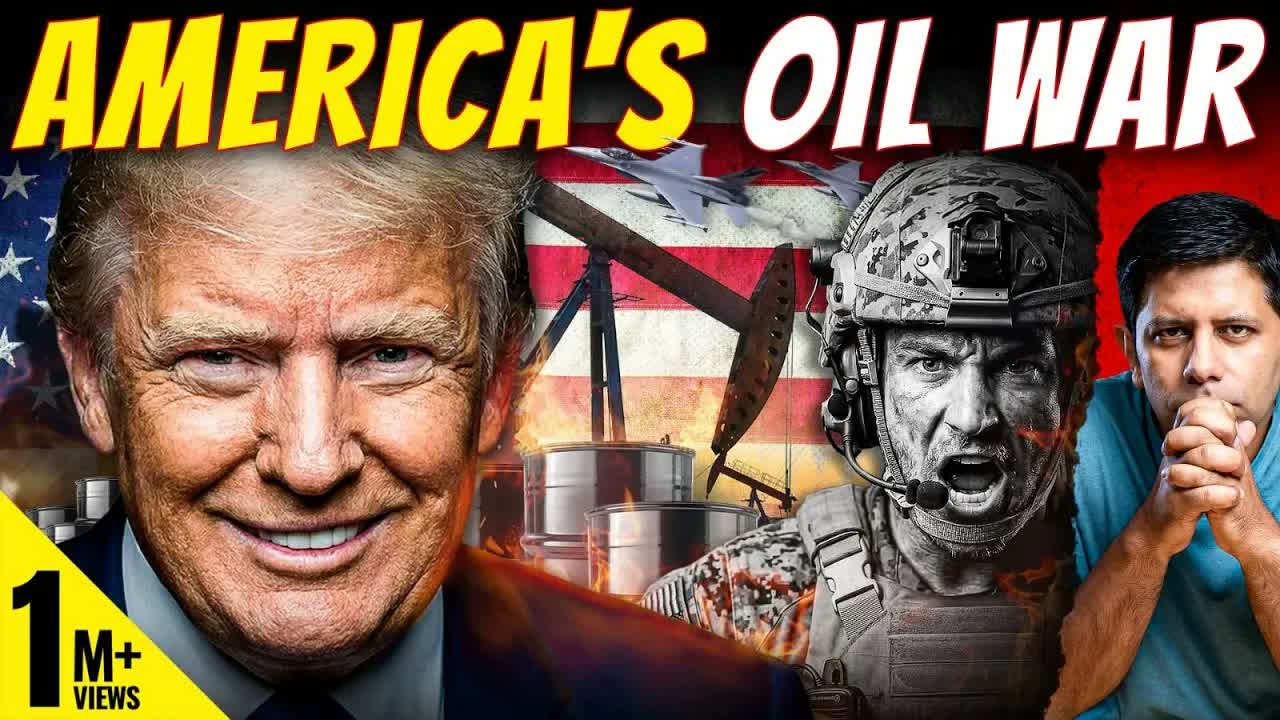
Has Trump Admitted Defeat? | How Did TAFU With Iran Happen? | Is Netanyahu Alive?
Three weeks into the US-Iran conflict, the situation has crystallized into two undeniable truths: America will not win this war, and President Trump never had—and still lacks—a coherent plan for achieving victory. As oil prices surge past $100 per barrel and America’s traditional allies refuse to join Trump’s grand coalition, the president faces mounting pressure from all quarters while questions swirl about Israeli Prime Minister Benjamin Netanyahu’s status after a sudden disappearance from public view.
The TAFU Reality
A new acronym has emerged on Deshbhakt to characterize the Trump administration’s approach: TAFU—Trump Always F***s Up. This characterization stems from the administration’s apparent inability to anticipate consequences or adapt to rapidly changing battlefield realities. After assassinating 40 Iranian leaders, including Ayatollah Khamenei, the US expected Iran to collapse or surrender. Instead, Iran has mounted a robust defense, targeting American assets with precision and forcing the US Navy to maintain距离 from Iranian waters.
Trump’s shifting rhetoric now appears to praise aspects of Iran’s response, a reflection of his tendency to respect power above all else. Observers note this mirrors his earlier behavior toward China. “Trump is shocked?” asks one analyst. “Iran didn’t have to do that? You too should not have assassinated 40 of their leaders.”
Allies Abandon Ship
Perhaps the most damaging development for Trump has been the wholesale abandonment of his grand plan for the Strait of Hormuz. All allies rejected the proposal to send warships to reopen the critical waterway, declaring it “your mess, your making, you handle it.” The isolation extends across the diplomatic spectrum:
- Canada explicitly stated it will never support such operations
- Switzerland closed its airspace to US military operations
- Spain is considering expelling US bases from its territory
- Japan faces domestic protests against supporting America
- France refused to send warships
- The UK, traditionally America’s closest ally, declined to deploy its naval forces despite allowing US bombers to operate from its bases
- NATO members collectively responded: “This is your mess… nothing to do with it”
Even the Gulf Cooperation Council countries, while privately wanting Iran contained, have publicly distanced themselves from direct military involvement.
The Netanyahu Mystery
Speculation about Netanyahu’s fate exploded after he failed to appear at a government meeting. Social media erupted with claims he had been eliminated and replaced by an AI avatar. In an attempt to quell rumors, Netanyahu’s office released a video showing him at a Jerusalem café—but skepticism swiftly followed. Within hours of that video’s release, Mojtaba Khamenei and even Kim Jong Un were reportedly shown at the same café in what analysts suggest may be AI-generated content.
Deepfake analysts examining the Netanyahu video reported mixed results, but the damage was done: in an era where AI can convincingly replicate faces and voices, a single video cannot prove liveness. The fact that Netanyahu remains in hiding—whether genuinely for security reasons or because he is no longer alive—demonstrates how significantly Iran’s targeting capabilities have improved. As one commentator noted: “Whether dead or alive… this shows how much Iran’s targeting capability has increased.”
Israel claims to have eliminated Iran’s Basij commander Gholamreza Soleimani and security chief Ali Larijani, though Iran has offered no confirmation. Mojtaba Khamenei, son of the assassinated Supreme Leader, also remains out of public view, reportedly injured in the attack that killed his father.
Economic and Military Collapse
The war’s economic consequences are spiraling. Oil has crossed $100 per barrel, with some analysts predicting $120-150 if Hormuz remains closed. The Indian stock market crashed 12 trillion rupees in a single day, with the Sensex falling 2,400 points. The global economy faces prolonged disruption as energy supplies from the Gulf Come under sustained attack.
Military setbacks multiply. America has been forced to move its aircraft carriers 700-1,000 km away from Iran due to drone and missile threats. The US cannot even protect its Green Zone in Baghdad from repeated attacks. The Pentagon requests $200 billion for the Iran war—equivalent to 50% of Iran’s GDP.
Trump’s mental state appears increasingly fragile. At a recent press conference, he confused California Governor Gavin Newsom’s title while criticizing his cognitive abilities, then hypocritically called the governor “President of America.” His angry tweets and public outbursts suggest a leader under extreme pressure with no clear exit strategy.
The Separation of Israel and America
A crucial—and dangerous—dynamic has emerged: Israel and America are fighting different wars with divergent objectives. Israel continues its “Greater Israel” project, displacing over 1 million people in Lebanon, using white phosphorus, and systematically destroying infrastructure—all while America bears the costs and diplomatic fallout.
Trump complains that Netanyahu is attacking without his knowledge, but evidence suggests full coordination. As one analyst summarized: “Israel does what it needs to do. The US is quietly supporting it along the way. But the cost of war will have to be borne by the American taxpayer.”
The rift Trump claims to exist may actually be a good cop-bad cop routine designed to fool the international community while both nations pursue maximalist objectives. This pattern has repeated before—during the 12-Day War last June, similar public disagreements preceded continued Israeli operations inside Iran.
No Exit in Sight
With the Gulf states refusing to host American operations, Europe declining to participate, and Iran refusing to negotiate under pressure, Trump finds himself trapped. His threats to expand the war—mentioning Cuba as a potential next target—reveal an administration lashing out without strategy.
The coming days may reveal whether ground forces are deployed. The 82nd Airborne Division has been placed on standby for possible deployment to Iranian islands to cut off oil exports. Meanwhile, Iran continues its “victory denial” strategy: it cannot win a direct war but can prolong the conflict until American public opinion and resources force withdrawal.
As the war enters its fourth week, one thing is clear: Trump’s TAFU moment has arrived, and no amount of posturing can conceal the reality that America has stumbled into a conflict it cannot win, with allies who won’t help, against an enemy that won’t quit.