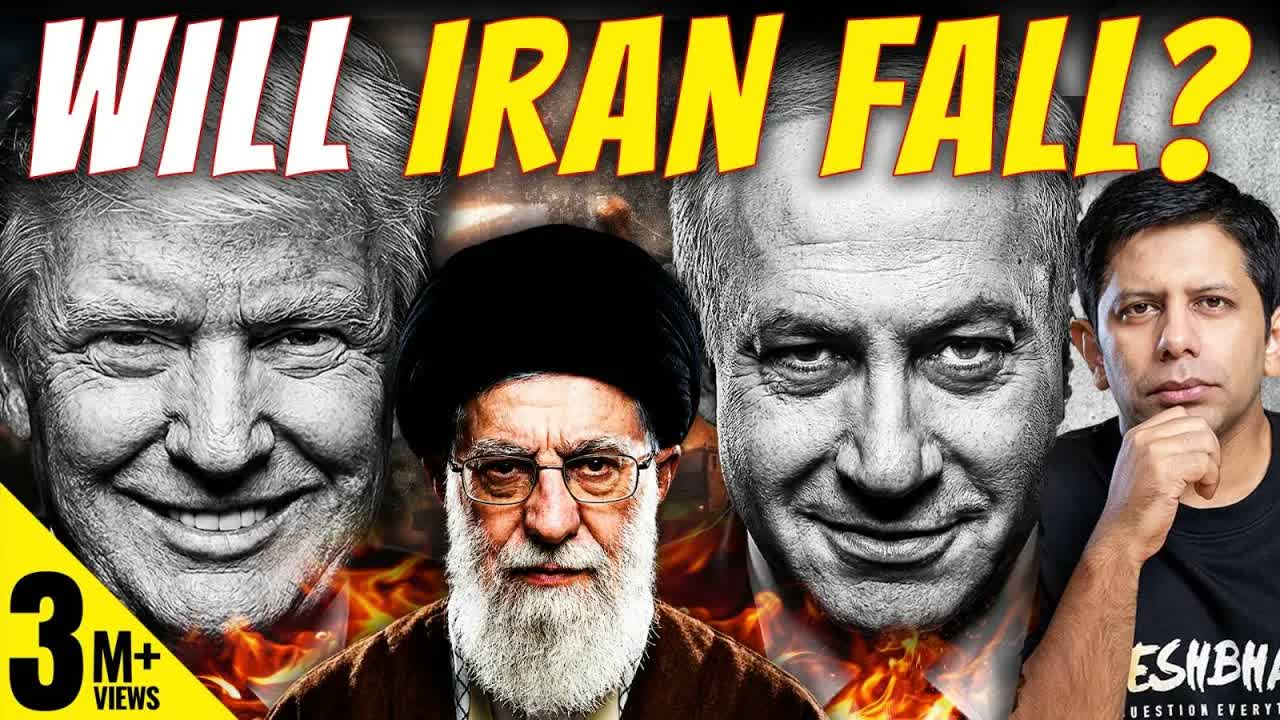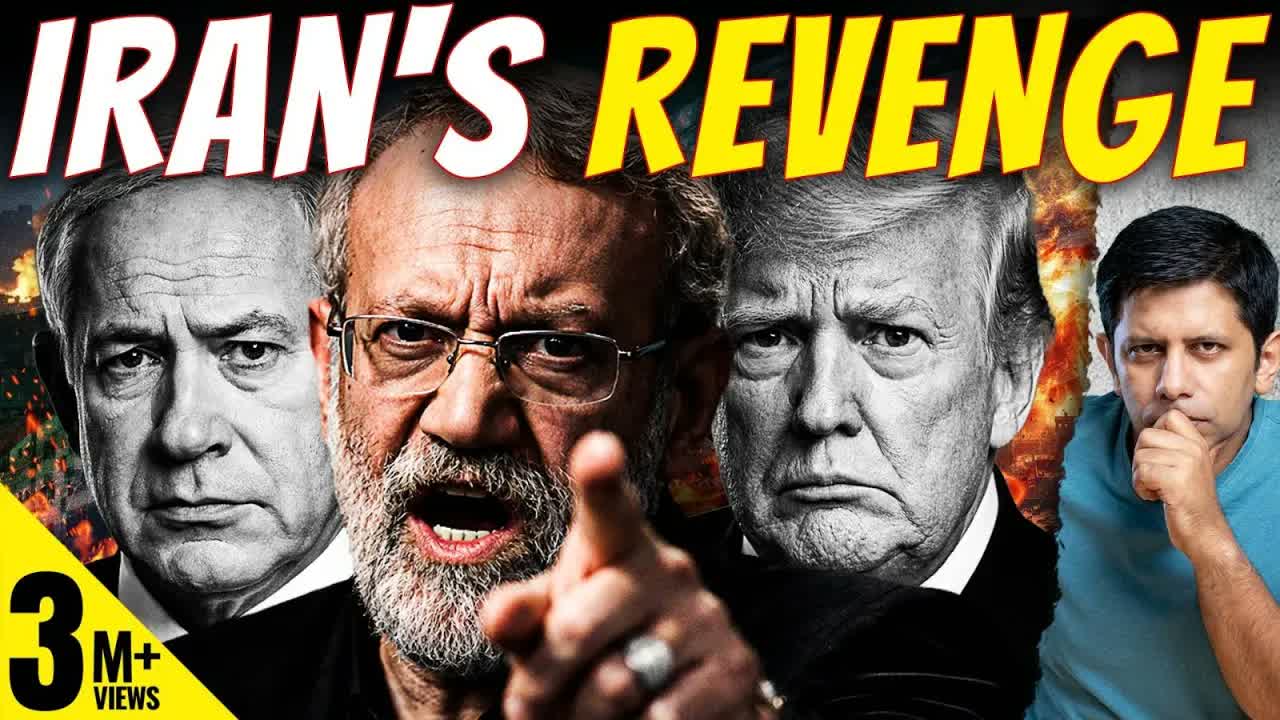
Iran After Khamenei’s Death - To Surnder Or Seek Revenge? 5 Burning Questions
The February 28, 2026 assassination of Supreme Leader Ayatollah Ali Khamenei—confirmed by Iranian state media following initial denials—has thrown Iran, the Middle East, and global energy markets into uncertainty. Five critical questions now dominate analysis of what comes next.
How Did Israel and the U.S. Eliminate Khamenei?
The operation demonstrates an unprecedented level of intelligence penetration within Iran. According to the video, the attack employed bunker-busting bombs—indicating Khamenei was located in a fortified bunker, not in the open. Satellite imagery confirmed the weaponry.
Former Israeli Prime Minister Ehud Barak suggested that Mossad’s success stemmed from long-term infiltration and recruitment within Iranian systems. The operation follows a pattern: Hamas leader Ismail Haniyeh was killed by a bomb planted weeks earlier in his guesthouse; Hezbollah Secretary-General Hassan Nasrallah was eliminated in a precision strike after his location was pinpointed; thousands of Hezbollah operatives were injured when explosive-laden pagers and walkie-talkies detonated simultaneously in September 2024.
The integration of hacking, human intelligence, and precision strike capabilities represents a redefinition of modern warfare—one that intelligence agencies worldwide will study.
What Is Iran’s Chain of Command?
The crucial question is whether Iran’s military and political structures remain functional after losing their supreme leader for 37 years. Khamenei had exercised absolute authority since 1989, controlling the Revolutionary Guard Corps (IRGC), military, judiciary, and media through a ruthless system of patronage and purges.
Evidence suggests contingency plans exist. Khamenei reportedly delegated launch authority to a small group of generals in the event of his absence, potentially authorizing ballistic missile launches without requiring further approval. Iran possesses 2,000-3,000 ballistic missiles, including supersonic variants that even Israel fears, and 3,000-6,000 mines capable of blocking the Strait of Hormuz.
Constitutionally, a council comprising the Head of Judiciary, the Guardian Council, and the President assumes temporary authority. Three potential successors had been identified by Khamenei, including his son Mojtaba (though Khamenei reportedly opposed a hereditary succession) and the grandson of Ayatollah Khomeini.
The continuity—or breakdown—of command will determine whether Iran retaliates with strategic missiles or descends into internal conflict.
Will Iran Escalate or Negotiate?
Iran’s initial response to Khamenei’s death was massive: missile attacks against American bases in seven countries, demonstrating the IRGC’s operational capacity despite leadership losses. The transcript asks whether this was an emotional, indiscriminate outburst or a calculated demonstration of remaining capability.
Scenarios include:
- Smooth transition: New leadership continues the war against America and Israel, potentially escalating missile attacks
- Hardliner takeover: Revenge drives more aggressive military action, possibly including use of Iran’s nuclear stockpile
- Doomsday scenario: Iran fractures like Syria, with competing factions carving territories—potentially requiring American ground troops, which Trump has contemplated
Iran’s simultaneous blockade of the Strait of Hormuz and mining operations suggest a determination to inflict maximum economic damage globally while negotiating from strength. Iran has reportedly refused ceasefire talks unless America and Israel accept “complete defeat and surrender, in writing.”
What Does This Mean for Israel’s Regional Dominance?
The assassination removes Iran’s most influential strategic figure. For Israel, the kill-list includes not only Khamenei but IRGC commanders and nuclear scientists. The strategic objective appears to be decapitating Iran’s leadership to force regime change or submission.
If successful, Israel would become the unchallenged hegemon in the Middle East, with America as its global guarantor. However, the transcript raises skepticism about whether assassination brings stability. Past regime changes in Iraq, Libya, and Afghanistan created power vacuums filled by chaos and extremism.
A destabilized Iran could fracture into warring factions, potentially more hostile to both Israel and the U.S. than the current theocracy. Iranian hardliners already frame Khamenei’s death as martyrdom; this could galvanize resistance rather than demoralize it.
Is the International Order Collapsing?
The operation’s legality is questionable: Israel assassinated a foreign head of state in his own country, with U.S. support. No UN authorization was sought. Congress was bypassed. International law scholars warn this establishes a precedent where powerful states may eliminate leaders they disfavor.
The transcript notes the contradiction: nations are told to abandon nuclear weapons for security guarantees, yet Saddam Hussein (no nukes) was hanged; Gaddafi (disarmed) was executed; Khamenei (no nukes) was assassinated. North Korea’s Kim Jong Un, with nuclear weapons, faces no such threat.
This signal—“have nukes, survive; lack nukes, die”—may accelerate global nuclear proliferation. China, observing the pattern, may conclude it needs greater deterrent capabilities. Regional powers across the Middle East and Asia will reassess their security postures.
The erosion of norms extends to territorial integrity. The same week saw renewed attention on Trump’s Greenland annexation ambitions. If America and Israel can wage wars and assassinate leaders unilaterally, what limits remain on great power behavior?
The Democracy Question
The officially stated goal was restoring democracy to Iran. Yet the method was extrajudicial assassination by a foreign power—hardly a democratic process. The transcript asks whether dropping explosives from drones brings freedom or merely replaces one authoritarian structure with chaos.
Iran has a history of popular protests—the 2009 Green Movement, the 2022 Mahsa Amini uprising, and recent economic demonstrations. Whether these movements would coalesce into stable democratic governance, or whether civil war would follow Khamenei’s death, remains unknown.
Implications for India and the Global South
The transcript includes a pointed warning for India and similar nations: “This can happen to us tomorrow too. Because the way America’s bullying has increased now, America can do whatever it wants in collaboration with Israel. No one to save, no one to speak.”
If the U.S. and Israel can eliminate Iran’s top leadership without consequence, the precedent extends globally. India’s strategic autonomy—its multi-aligned foreign policy, its relationships with both Russia and the West—may be tested if Washington decides its policies require compliance.
The 24 hours following Khamenei’s death changed “the definition of power in the Middle East, the definition of regional power, the definition of peace,” as the video states. What emerges will depend on whether Iran’s institutions hold, how America manages the aftermath, and whether other nations—China, Russia, European powers—accept this new norm of targeted leadership elimination.
The world now watches whether Iran surrenders, retaliates, or fractures. Each path carries profound risks for global stability, energy security, and the fragile framework of international law that has governed—however imperfectly—since 1945.