Iran’s Massive Retaliation Catches America By Surprise | Trump Looking For Way Out?
Six days into Operation Epic Fury, Iran’s relentless retaliation—targeting U.S. bases across the Middle East, destroying critical infrastructure, and leveraging a decentralized “Mosaic Defense” doctrine—has upended American expectations of a quick regime change and left the Trump administration searching for an exit strategy.
The Scale of Iran’s Response
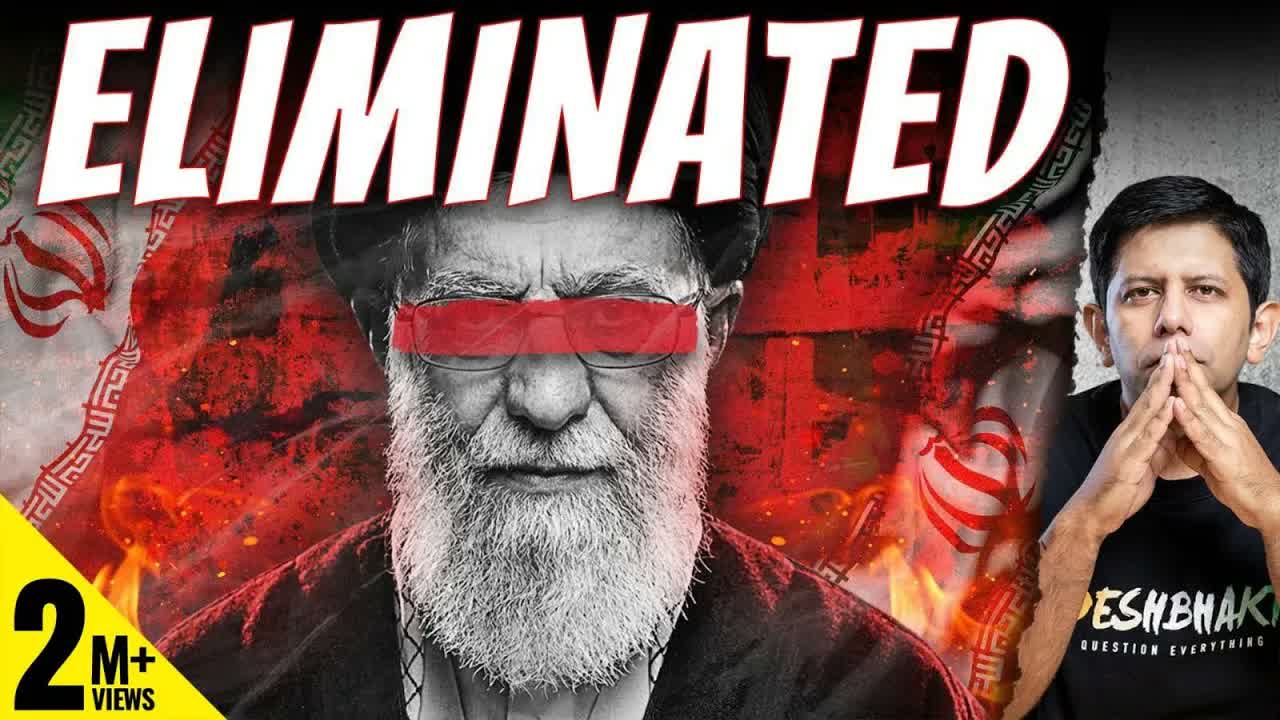
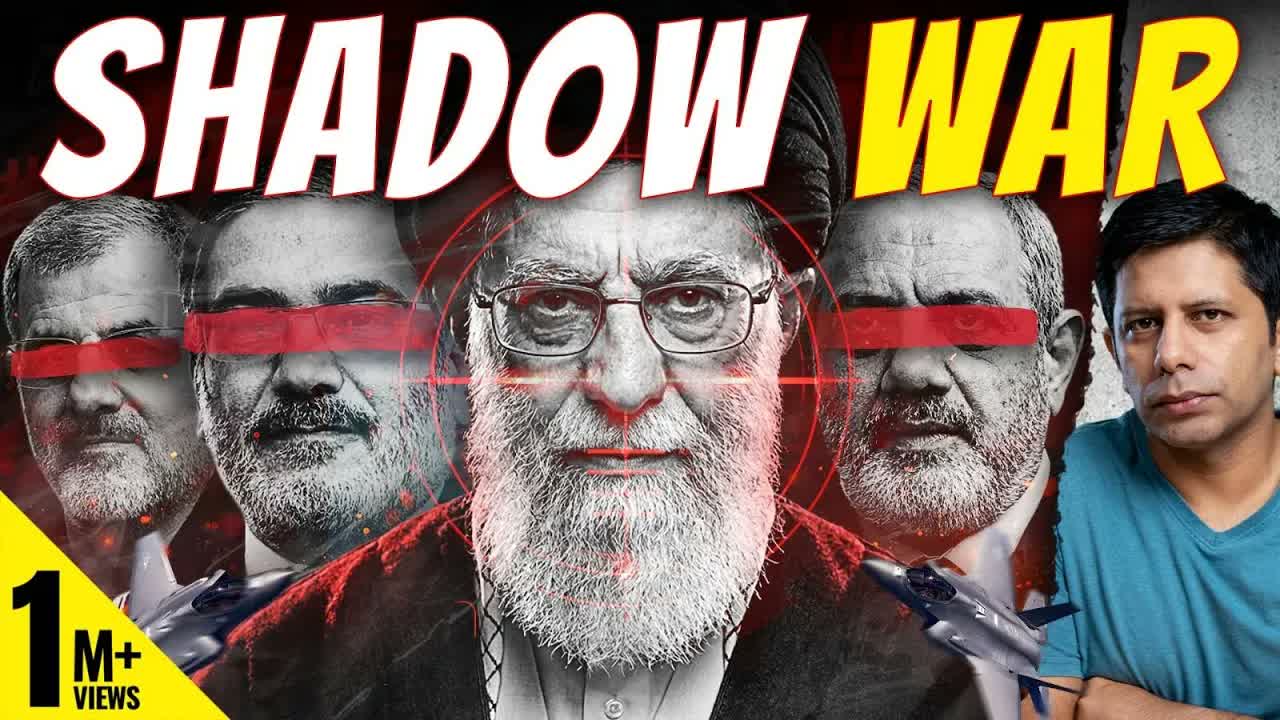
Within hours of the February 28 U.S.-Israel strike that eliminated Supreme Leader Khamenei and 40 top commanders, Iran began launching ballistic missiles and drones at American targets throughout the region:
- U.S. Naval Base, Bahrain: Repeatedly attacked
- U.S. Embassy, Kuwait: Targeted
- Dubai hotels and airport: Commercial infrastructure hit
- F-15 fighter shot down: Possibly by friendly fire from Patriot systems
- Ammunition depot, Erbil (Iraq): Destroyed
- Duqm Commercial Port, Oman: Hit
- UK Cyprus base: Drone attack, limited damage
- USS Abraham Lincoln: Iran claims four cruise missile hits; U.S. denies but carrier withdrawn from region
- Three U.S. troops reported dead
By March 1, sirens blared continuously in Tel Aviv and Jerusalem. Explosions rocked Israel daily. The anticipated quick capitulation had become a regional war of attrition.
The Strategic Triad: Iran’s Three-Pronged Approach
Iran’s strategy targets three distinct categories:
1. U.S. Military Assets Every American base within missile range faces attack: Bahrain, Kuwait, UAE, Iraq, and any country that supports the U.S. The UK learned this when its Cyprus base was struck after expressing support. The message: hosting U.S. forces makes you a target.
2. Oil Infrastructure From day one, the IRGC attacked oil tankers in the Strait of Hormuz, issued radio warnings, and forced major shipping companies like Maersk to suspend crossings. The resulting queue of stranded ships and disrupted flow caused Brent crude to jump 13% in a single day. Attacks on Gulf refineries—including Saudi Arabia’s Aramco plant via Houthi coordination—amplify the economic shock.
3. Civilian Pressure Points Hitting Dubai hotels, airports, and Oman’s commercial port serves a calculated purpose: create pain for Gulf business elites who will then pressure the U.S. to end the war. As the transcript notes: “If this area is not peaceful then people will not invest here.” The strategy risks backlash but reflects Iran’s “fight or die” mentality—the regime cares more about immediate revenge than long-term diplomatic consequences.
The Mosaic Defense: Decentralized Warfare
Iran’s most confounding innovation is its “Decentralized Mosaic Defense System,” revealed in Foreign Minister Hossein Amir-Abdollahian’s March 1 tweet challenging the U.S.: “Come and drop as many bombs as you want.”
How it works:
- Iran’s 31 provinces function as autonomous military units
- Each province can independently launch missiles and sustain operations
- No central command to decapitate
- Designed specifically to survive leadership losses—the very scenario the U.S. created
Developed by the IRGC after learning from conflicts in Iraq and Afghanistan, the doctrine acknowledges Iran’s technological inferiority. It cannot win a conventional war against the U.S. Instead, it wages guerrilla warfare at the national scale: divide the country into independent cells that can continue fighting even if Tehran is destroyed.
This explains why Iran continues to strike with maximum intensity despite losing its leadership. The system was built for exactly this scenario.
The Missile Arsenal: What’s Still Unused?
Iran possesses 2,000-2,500 operational ballistic missiles with ranges up to 2,500 km. More critically, it has not yet deployed its most advanced systems:
- Fattah-2 hypersonic glide vehicles: Mach 15 speed, mid-flight trajectory changes, nearly impossible to intercept
- Khorramshahr-4: 13-meter, 20-ton solid-fuel missile with 1,500-1,800 kg warhead, Mach 16 outside atmosphere
- Decoy swarms: Advanced re-entry vehicles deploying multiple decoys, forcing defenders to expend multiple interceptors per real warhead
The transcript notes: “It is said that the most deadly missiles in it have not even been used. Now the news is coming that after initial strikes, this Deadly Arsenal will be released.”
This suggests Iran is pacing itself—running down U.S./Israeli interceptor stockpiles while reserving its best weapons for later phases when defenses are depleted.
The Economic War of Attrition
The central dynamic mirrors Iran’s drone strategy: cost imposition.
- U.S. interceptors: THAAD ($10-15M), Patriot PAC-3 ($1M+), Arrow missiles (several million each)
- Iranian missiles: $100K-$500K for basic ballistic missiles; hypersonics likely cheaper than interceptors
- Ratio: Each Iranian missile may require 2-6 interceptors to guarantee kill
Bloomberg reported Qatar privately warned that Patriot stockpiles would exhaust in four days at current rates. The U.S. cannot manufacture interceptors at the speed Iran can produce missiles—many of which are based on decades-old Chinese and North Korean designs but remain effective in saturation attacks.
Trump’s Dilemma: No Good Options
Trump faces a strategic disaster:
- Expected quick victory → turned into protracted war
- Expected regime collapse → Iran fights harder without leadership
- Expected limited regional response → Iran attacking every Gulf state
- Expected no American casualties → Three dead, bases under siege
- Expected coalition support → Allies refusing to send warships for Hormuz escort
Trump’s messaging oscillates between victory declarations (“We’ve devastated Iran”) and pleas for help (“This is a global problem”). He has threatened nuclear weapons use, but advisors warn this crosses red lines even for Israel. The Pentagon reportedly told Congress Iran was not preparing an attack—undermining the war’s original justification.
Joe Cirincione’s prediction quoted in the transcript encapsulates the irony: “This war was fought to overthrow the government and regime change. The question now is where will this war lead to regime change? In Iran or in the United States?”
Why Iran Is Not Surrendering
Iran’s leadership believes ceasefire now would be strategic error:
- Historical lesson: June 2024 ceasefire gave U.S. time to restock interceptors and re-mobilize; Iran won’t repeat that mistake
- Cost threshold: Iran aims to impose damage sufficient to make the U.S. seek terms, not the other way around
- Martyrdom narrative: Khamenei’s assassination during Ramadan (Islamic holy month) fuels religious fervor, not despair
- Regime consolidation: Attack has unified factions; resistance has become patriotic duty
The Interim Leadership Council and IRGC have explicitly stated the “most intense offensive” is yet to come. They calculate that the U.S. cannot sustain a 3-6 month conflict without severe political fallout at home.
The Global Economic Domino Effect
Iran’s oil disruption strategy has cascading impacts:
- Oil prices: Brent +13% in one day; U.S. crude hitting $75
- Stock markets: Global selloff as energy costs spike
- Shipping insurance: Vessels avoiding Hormuz cannot obtain coverage
- Supply chains: Everything from plastics to fertilizers dependent on oil derivatives faces inflation
If Iran sinks ships in the Strait, creating a physical blockage, the impact could rival the 1973 oil crisis.
Institutional Penetration: How Deep?
Iran’s success suggests sophisticated intelligence preparation:
- Decentralized launch sites: Thousands of hidden missile positions
- Survivable C2: Communications systems that function without central coordination
- Supply stockpiles: Years of missile production stockpiled in underground cities
- Training and doctrine: Mosaic Defense operationalized across 31 provinces
The U.S. likely underestimated Iran’s preparation. Decades of sanctions forced Iran to develop asymmetric capabilities. It cannot match U.S. air power, so it developed strategies to attrit U.S. advantages through volume, dispersion, and cost imposition.
The Exit Problem
How does Trump end this war?
- Negotiated ceasefire: Iran demands complete U.S. withdrawal from Middle East, reparations, written surrender—unacceptable to Trump
- Escalate to ground invasion: Would require 500,000+ troops; potential for prolonged insurgency; politically toxic in U.S.
- Nuclear strike: Even Trump likely balks at crossing that threshold; Israel might, triggering global condemnation
- Continuelimited strikes: Depletes interceptors while Iran’s arsenal regenerates
Trump’s hope for an internal Iranian revolution appears naïve. The assassination may have strengthened regime unity. Iranians may dislike their government, but foreign attack breeds patriotism—as seen in UK during Blitz, or U.S. after 9/11.
The Unanswered Question
The transcript ends with a chilling assessment: “It’s like you assassinated the pope during Lent. It’s about the same sentiment.” The religious dimension—killing a Supreme Leader in Ramadan—makes reconciliation nearly impossible.
Iran has demonstrated it can fight as a “headless” entity, inflict severe economic damage, and survive the most powerful military on earth. The U.S. calculated military power but not Iranian ideological resilience, decentralized military doctrine, or willingness to endure catastrophic losses.
Trump sought a quick victory to bolster his domestic standing. Instead he faces a quagmire that could define his presidency—and possibly catalyze the end of American unipolarity.
The “way out” now requires terms that save face for both sides. But neither side shows readiness to appear weak. The escalation ladder has no visible top.