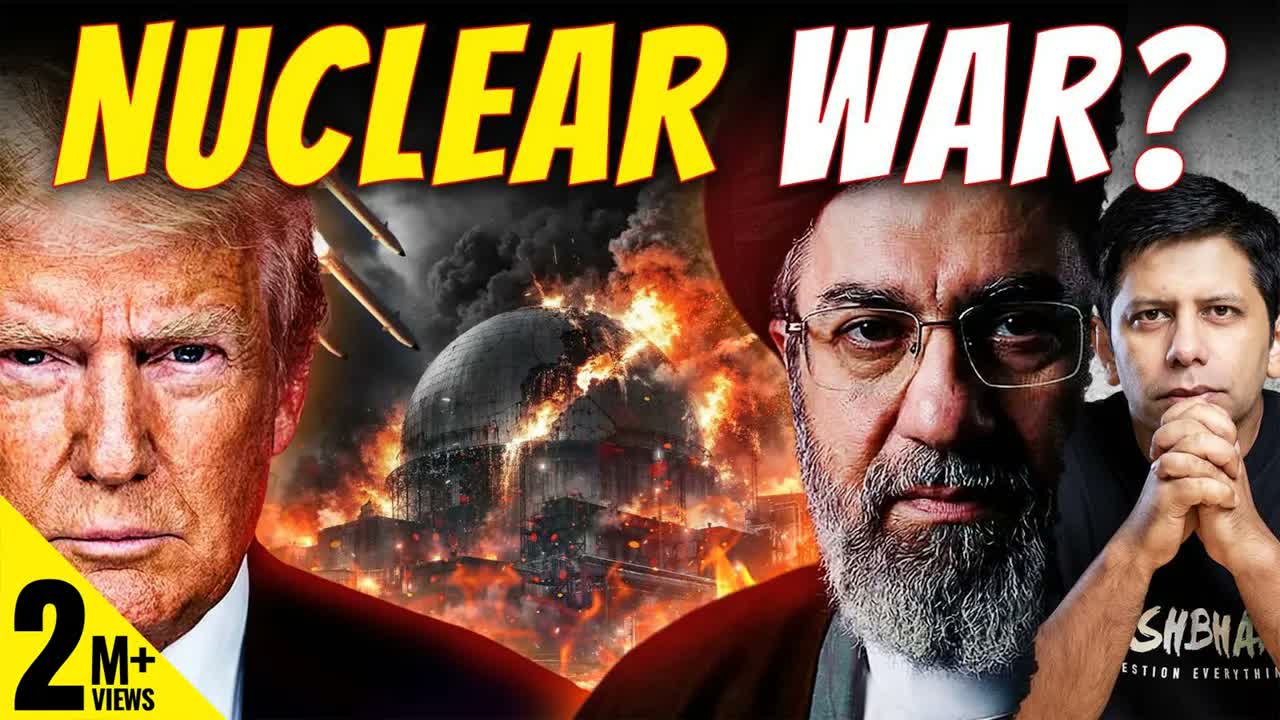
The conflict between the United States and Iran has entered its fourth week with a striking reversal of expectations. Despite America’s annual defense budget of approximately one trillion dollars—vastly outspending Iran’s military expenditure—the Trump administration finds itself in an unprecedented defensive posture, now seeking a unilateral five-day pause in hostilities.
This shift raises fundamental questions about the nature of modern warfare and the limitations of technological superiority when matched against strategic discipline and asymmetric tactics.
The Reality of American Losses
While official American statements have downplayed Iranian successes, multiple independent sources confirm significant damage to U.S. military assets. The most consequential development occurred when Iran claimed to have shot down an American F-35 Lightning II, the world’s most advanced stealth fighter jet. The U.S. Central Command has acknowledged an emergency landing by a damaged F-35 but has not released photographic evidence of the aircraft’s condition.
The financial implications are substantial. Each F-35 costs approximately ₹1,000 crore (roughly $120-130 million) to manufacture. If verified, this would mark the first time an F-35 has been successfully targeted in an active war zone—a significant blow to both the aircraft’s reputation and America’s technological mystique.
The losses extend beyond fighter jets. Within the first three weeks of March, Iran reportedly shot down approximately 12 MQ-9 Reaper drones—each valued at $16 million—representing a collective loss of nearly $200 million. The U.S. Air Force had already ceased production of the MQ-9 in 2020, citing concerns about its vulnerability against adversaries.
Naval Power Face-Tally
The U.S. Navy’s carrier strike groups, traditionally symbols of American power projection, have also faced setbacks. Two carrier groups—USS Abraham Lincoln and USS Gerald R. Ford—were deployed to the region. However, the USS Gerald R. Ford suffered a fire in its laundry room on March 12 that burned for 30 hours and forced 600 crew members from their quarters. The ship has been withdrawn to a Greek naval base for repairs.
Meanwhile, the USS Abraham Lincoln’s group has reportedly moved 1,000 kilometers away from Iran’s coast, despite American denials of any damage. This withdrawal, confirmed by independent analysts, demonstrates the effectiveness of Iran’s anti-ship capabilities against even the most formidable naval assets.
Missile Defense Systems Compromised
Perhaps the most strategically significant losses involve America’s integrated air defense network. The U.S. had deployed THAAD and Patriot missile defense systems to protect its interests and regional allies. However, within two weeks of the conflict’s start, Iranian missiles had:
- Destroyed the AN/FPS-132 radar system, valued at $1.1 billion and capable of scanning a 5,000 km radius
- Significantly degraded American radar coverage in the Middle East
- Forced the emergency redeployment of Patriot systems from East Asia
A THAAD battery costs over $800 million, and individual Patriot interceptors cost $3-4 million each. The destruction of these systems represents billions in losses and leaves regional partners vulnerable to further attacks.
Iran’s Asymmetric Strategy
Iran’s success stems not from matching American technology but from exploiting its vulnerabilities through multiple detection methods:
-
Infrared Detection: Iran employed electro-optical infrared (EO-IR) sensor systems that detect heat signatures rather than relying on radar. The F-35’s stealth design cannot conceal engine heat emissions.
-
Modified Inventory: Experts believe Iran used a modified Russian R-27T infrared-guided missile—technology dating to the 1990s—capable of speeds up to Mach 5.
-
Persistent Pressure: Iran’s Shahed drones and ballistic missiles have maintained continuous pressure on American defenses, exhausting interceptors and degrading layered protection.
American military analysts had warned for years that drones and low-cost weapons could overwhelm expensive defense systems. Iran has validated those concerns.
###Leadership and Strategy Questions
The Trump administration’s approach has drawn criticism for its inconsistency and lack of clear objectives. From February 28 onward, the administration has:
- Claimed complete air dominance while Iranian strikes continued
- Alternated between declaring victory and threatening new attacks
- Requested allied support after advising them to stay away
- Ultimately proposed a unilateral five-day pause
These contradictions suggest an administration reacting to events rather than executing a coherent strategy. The decision to announce a pause—while Iran continues to reject ceasefire talks—indicates the U.S. has reached the limits of its operational capacity.
The Strategic Implications
Iran’s military performance has broader implications for global security:
-
Doctrine Revision: Nations worldwide are observing these developments and updating their own war doctrines.
-
Carrier Vulnerability: The conflict may signal the end of the aircraft carrier era as the ultimate power projection tool.
-
Technology vs. Tactics: Expensive weapons systems prove vulnerable when supported by poor strategic planning and low morale.
-
Allied Confidence: Regional partners who relied on American security guarantees are reassessing their defense postures.
What Comes Next
The five-day pause announced by President Trump may provide temporary relief, but it does not address the fundamental strategic shifts underway. Iran has stated it will not negotiate until American forces withdraw from the Gulf region—a non-starter for the U.S.
The coming days will test whether either side can achieve decisive victory or whether the conflict settles into a protracted stalemate. What is already clear is that the myth of uncontested American military supremacy has been significantly tarnished.
As one analyst noted: “You can have the best weapons in the world, but they won’t be effective if the wielder lacks planning and discipline.” Iran has demonstrated precisely that combination of strategic patience and tactical innovation—exploiting every vulnerability in America’s technological advantage.